
Texas residents are now moving away from traditional wine cellars. While many people are satisfied with a good old hidden cellar, others have become attracted to wine room designs that look more appealing and are part of the house. This brings us to glass wine rooms.
The idea behind glass room design was gaining popularity due to its ability to blend functionality with elegance. Well-designed glass rooms provide excellent protection and allow you to enjoy the room at the same time.
Types of Glass Wine Cellars
When people say “glass wine cellar,” they’re usually talking about one of a few popular build styles:
- Glass wine room – A sealed, temperature-controlled room with a glass front or full glass walls.
- Glass-front cellar – The traditional cellar building style that incorporates glass doors and walls so the collection is viewable.
- Glass wine wall – A display-based structure using glass that may or may not be temperature-controlled depending on design/build style.
- Glass corner enclosure – The build style where glass is applied to an underutilized corner, converting it into a wine cellar.
- Glass pass-through or partition cellar – A glass wall built style that separates two spaces by acting as a barrier between two rooms, such as a dining room and lounge.
Why Glass Wine Rooms Are Getting So Popular in Texas Homes
1) Open floor plans
Many houses, including newly built or renovated ones, feature an open layout. Homeowners want features that feel connected to the main living space. With a glass cellar, it is possible to locate it in proximity to the dining room, kitchen, and lounge.
2) It transforms a collection into something useful in the house
If you’ve been collecting bottles over the years, they shouldn’t be stuck in a hot or hard-to-trust spot like an attic or a back room. Instead, a glass wine room lets you showcase the collection in a way that still feels clean and organized.
3) Glass wine cellars fit how Texans entertain
Texas homes are often designed around hosting family, friends, and gatherings. Whether it’s a dinner party, holiday event, or casual evening with guests, people want spaces that feel welcoming and conversational.
A glass wine room becomes part of that experience. Your house guests can see the collection, start conversations about specific bottles, and interact with the space without leaving the main entertaining area. It adds a high-end feel to homes while feeling warm, social, and approachable.
4) No basement? no problem
Basements are not common in many parts of Texas, so wine storage often ends up on the main level, under stairs, in a spare room, or in a converted closet. Glass can make those storage solutions feel designed, not like an afterthought.
5) Glass cellars make difficult spaces feel purposefully designed
Many homes have awkward or underused spaces that are difficult to decorate or utilize effectively. Areas beneath staircases, narrow hallway sections, unused corners, or extra wall space can easily feel unfinished or disconnected from the rest of the home.
A custom glass wine cellar can turn those challenging areas into one of the most visually striking parts of the house. Instead of wasting square footage, homeowners can create a feature that feels architectural, functional, and tailored to the home’s layout.
The Challenges of Glass Wine Rooms in Texas
Glass wine rooms can be a great fit for Texas homes, but they’re less forgiving than a traditional cellar with solid walls. When you add more glass, you change how the room holds temperature and manages moisture, which means the details matter more.
Here are the main challenges, and why they happen:
- More heat gain than a solid wall
Glass usually passes more heat through itself compared to an insulated framed wall. If the wine storage area is close to heated living spaces or receives any solar radiation, then the increase in heat gain affects the efficiency of maintaining a constant temperature. - Sealing matters more, especially around doors and glass framing
The wine room made with glass contains joints and seams than an ordinary enclosed room. This makes any small leakages of air into the room possible, causing fluctuation of temperatures and increased workload on the cooling system. - Light can create both heat and long-term wine risks
Strong light, especially sunlight, adds heat and can create hot spots inside the room. Over time, too much UV exposure can also be tough on wine, which is why placement, glass selection, and lighting design all matter in a glass-forward build. - Higher condensation risk if the room is not built correctly
When cold surfaces meet warm, humid air, moisture forms. With a glass-heavy design, you have more surfaces where that temperature difference can show up, especially if the vapor barrier and sealing are not done correctly.
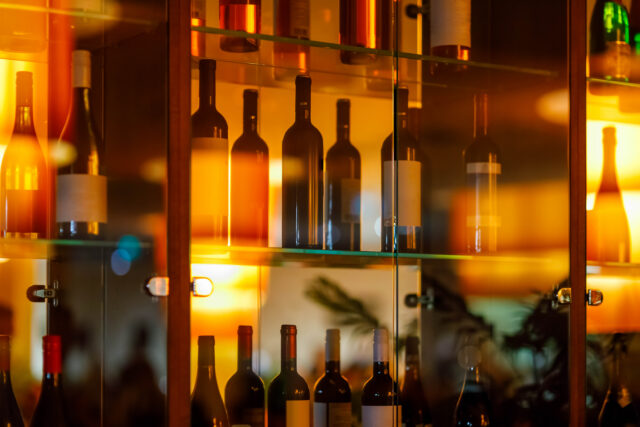
What “planning” looks like in a glass wine room build
Planning is simply making sure the room is designed like a true climate-controlled enclosure before the finishes go in. A few examples of what we sort out early:
- Location and exposure – Where the wine room sits in the home, whether it gets sun, and what rooms surround it.
- Enclosure details – How the insulation will be achieved, where the vapor barrier should go, and how the glazing frame will seal.
- Door and glass specs – Choosing glass and doors that seal correctly to achieve a temperature-controlled environment.
- Cooling strategy – The correct cooling system size based on full heat load, including glass, lights, and location.
- Lighting plan – Low heat lighting sources and positioning of these light fixtures to show off the bottles, but without heating the room or causing glare.
This is the work that makes the next section possible, because once the structure and systems are planned correctly, a glass wine room can look incredible and still perform like a true wine cellar.
The Most Important Details When Planning a Glass Wine Cellar
A sealed, insulated enclosure
Wine storage is only as good as the envelope around it. That means insulation and air-sealing that match the design. If warm air leaks into the space, the system has to constantly fight and the temperature swings more than it should.
A proper vapor barrier
The vapor barrier is part of the enclosure of the wine room and not the entire house. It is installed behind the interior finish of both the walls and the ceiling to prevent the intrusion of warm, humid air into the colder wine room. This prevents any problems of condensation and moisture in the room.
Glass and door designed for the purpose
All glass is not made equal in terms of its performance in a temperature-controlled environment. In some cases, insulated or double-pane glass is necessary, whereas in others, UV protection will be essential. The door plays an important role as well in ensuring that there is no leakage of heat in and out of the area.
Sizing of cooling based on actual measurements of the room
The size of the room does not tell us the whole story about the amount of cooling that will be needed. The presence of large windows, insulation, heat coming off from the lighting, and the location of the room relative to the rest of the house also influence the heat load.
Lighting that looks good without adding heat
It goes without saying that lighting fixtures are essential in creating an appealing wine room; however, certain types of lighting may add unnecessary heat while producing glare in the process. Low-heat lighting refers to LED lamps such as recessed LED canopies, LED strip lighting installed below shelves, and LED puck lights.
Key Design Choices That Make a Glass Wine Room Worth It
If you’re considering glass, the biggest wins come from a few smart decisions up front. These details decide whether the room is mainly a visual feature or a true long-term storage space that also looks great.
Framed vs frameless glass makes a real difference
Frameless glass can look sleek, but it typically offers less insulation than a framed system. If your goal is classic cellar conditions around 55°F for long-term aging, a framed glass enclosure is often the better route because it performs more like a traditional room.
Use the right glass, not just “nice glass.”
A glass wine room is not the place for standard single-pane glass. Many builds use insulated or double-pane glass because it helps maintain temperature stability and reduces the chance of condensation, especially in warm climates.
UV protection matters more than people think
Sunlight and UV exposure can be rough on wine over time, and a glass-forward design naturally raises the stakes. If the room gets any direct sun or strong ambient light, UV-treated glass and smart placement are worth discussing early.
A good-looking door still has to seal like a cellar door
With glass builds, tiny gaps around door frames and glass transitions can let warm, humid air creep in. That can lead to temperature swings, heavier cooling run time, and more condensation risk over time.
Plan the racking around how you actually use wine
This is where glass rooms get fun. You can combine bulk storage for cases with label-forward display rows for everyday favorites, so the room stays organized and practical, not just pretty. The best layouts make it easy to grab a bottle without rearranging half the wall.
Mistakes You Should Avoid When Building Glass Wine Rooms
If you’re planning a glass wine room, here are a few common mistakes to avoid:
- Turning it into a showcase rather than a wine room
Without temperature control and proper sealants, this is not a cellar but only interior decoration. - Positioning it directly under the sun
The presence of sunlight will contribute to heat gain and overload your cooling system. - Wrong door design and sealing techniques
A small leakage may affect performance significantly. - Choosing finishes before planning the enclosure and cooling
Lighting design must be considered early in your project plan, particularly in rooms with lots of glass surfaces. - Excess lighting inside the room
More lights will just heat your room and cause reflections.
Are Glass Wine Cellars Worth It?
If you are a Texas homeowner, definitely! You will have guaranteed storage, aesthetic value as an addition to your home, and convenience while entertaining guests or getting bottles.
There may be an added resale value, too. Good construction of a glass wine cellar can provide you with an added attraction as a homeowner because buyers look for unique features in good neighborhoods. The important thing is good construction. Otherwise, it will only become frustrating when you are unable to maintain constant cellar temperatures. But, when done right, it adds class to the house and performs its job flawlessly.
What Affects the Cost of a Glass Wine Cellar?
A few variables drive the cost of a glass wine cellar installation:
- Amount and type of glass
- Door materials and sealing details
- Bottle capacity and racking design
- Cooling system and installation requirements
- Lighting and finish selections
- Whether the room is new construction or a retrofit
The fastest way to get to a realistic quote is to start with the space, the bottle count, and the aesthetic.
The Planning Checklist for a Glass Wine Cellar in Texas
If you’re in the early stages of planning your glass wine cellar, here’s a simple checklist that helps:
- What area of your house will it be in?
- How many bottles do you want to store now?
- How quickly is your stock/collection growing?
- Do you want mostly bulk storage, or more label-forward display?
- Is the area in the shade, or does it get direct sunlight?
- Do you want a full glass room or a glass-front design?
- Is it important for you that it be hidden or a focal point?
Talk To Us About Your Glass Wine Cellar Project
Have you been considering having a glass wine cellar in Texas? Reach out today and tell us where the space is, how many bottles you want to store, and the style you have in mind. We’ll help you figure out the best next step.